Thrare › Commercial pressure washing
Parking decks, building exteriors, breezeways, sidewalks and loading areas across multifamily and commercial property in metro Atlanta.
The work
This is a scope we self-perform. The difficulty is rarely the cleaning. It is doing it on a property that cannot close.
Multi-level deck degreasing and washing, taken in sections so the deck stays in service. Overnight sequencing where a property needs it.
Four-level occupied deck, 4.5 days, never closed
Building washing and soft washing on multifamily and commercial elevations, with the right pressure for the substrate.
Common-area cleaning on a set cycle, which is where most multifamily complaints actually come from.
Sidewalks, entries, dumpster pads and loading zones, including degreasing.
Occupied sites
On an occupied property the schedule is the scope. Access windows, tenant notice, water control and reinstatement all sit inside the job rather than beside it.
A four-level parking deck was degreased over 4.5 days without ever closing the deck, taken level by level while residents kept using it. That is the model for occupied work: work in sections, control water and runoff, and hand each section back before the next one starts.
Pressure washing is one of the scopes we self-perform, alongside debris and hauling and property preservation. It also fits inside a larger managed project, which is usually where it belongs on a property that needs more than one thing done.
Straight answers
No. We work multifamily and commercial property only.
Yes, where the property needs it. Most occupied decks we have run were worked in daytime sections instead, including a four-level deck degreased over 4.5 days without ever closing the deck. We will tell you which fits your site.
Both, though a portfolio or a scheduled cycle prices better than an isolated job.
Certificates of insurance are issued to your entity before mobilization rather than after, and additional insured or lender wording is handled at the certificate stage. Coverage detail is provided with the vendor packet rather than published here.
Every pressure washing inquiry, from any page or any older link on this site, comes here. There is one commercial pressure washing page, not a set of city pages.
Proof
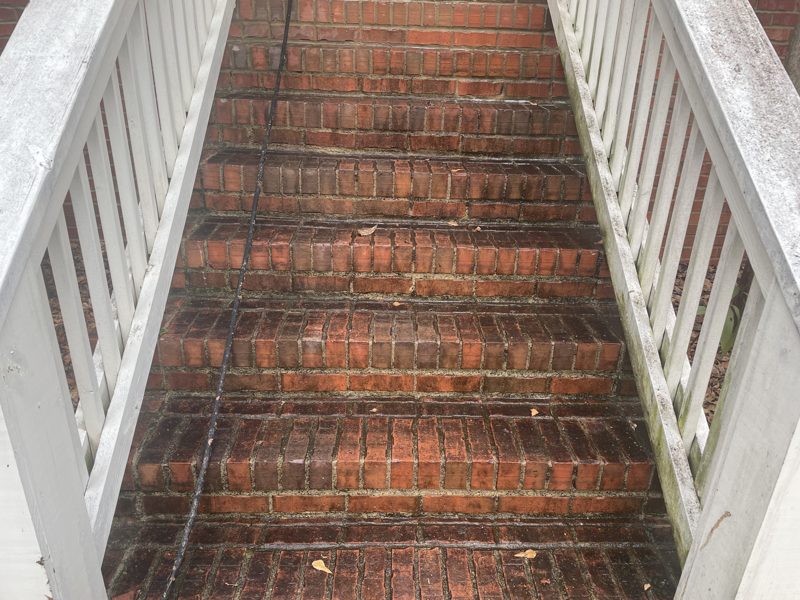
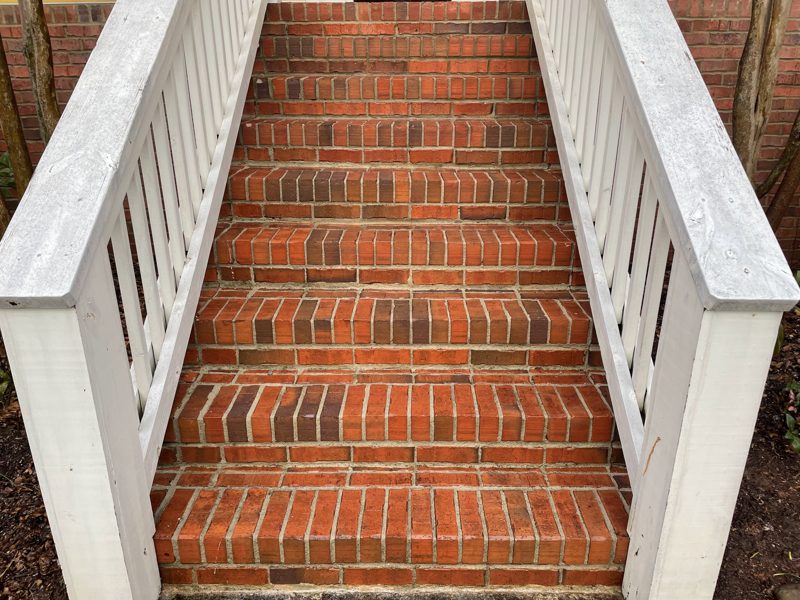
The most useful photograph of pressure washing is the one taken while the machine is working, because there is nothing to take on trust.
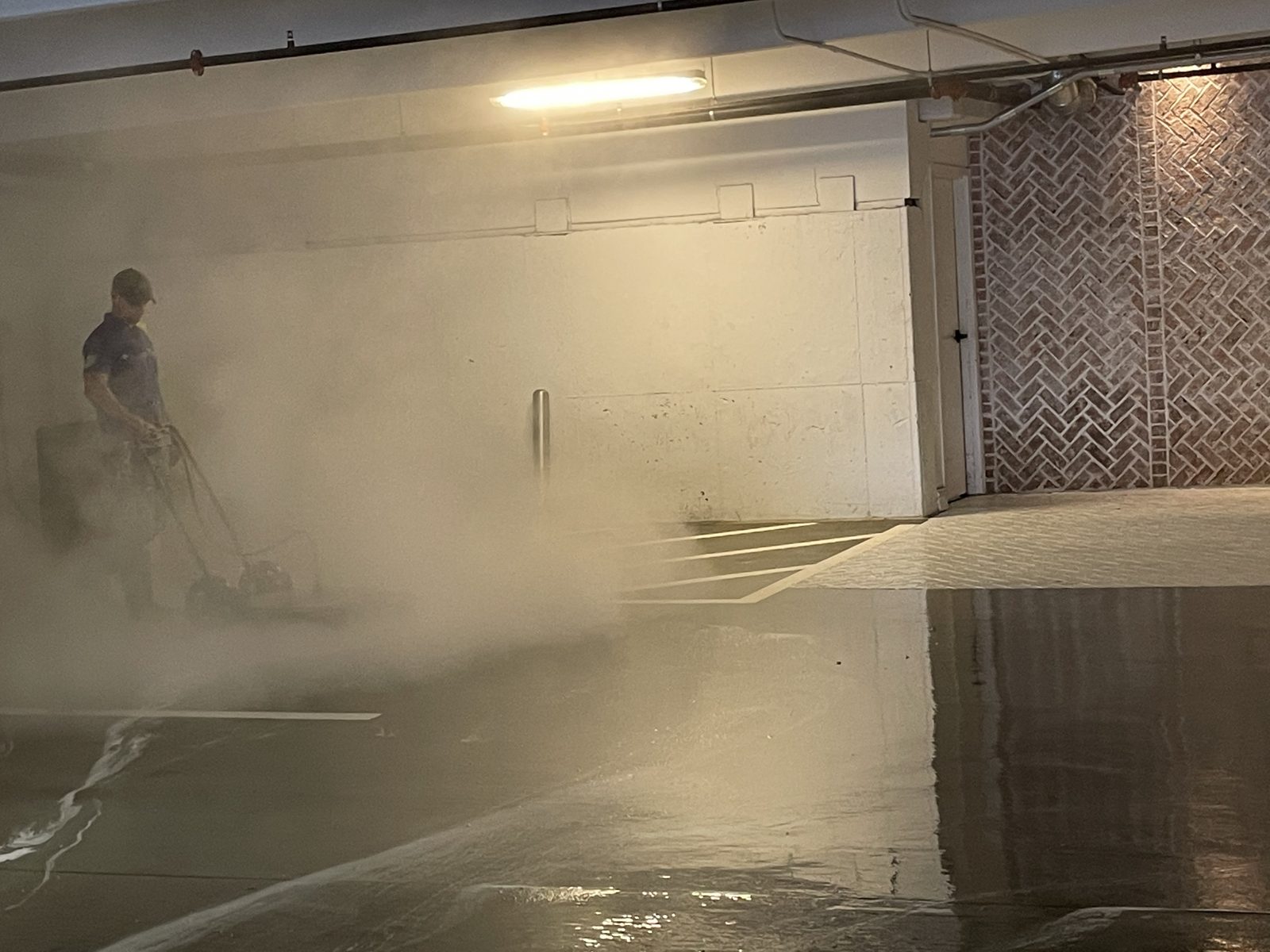
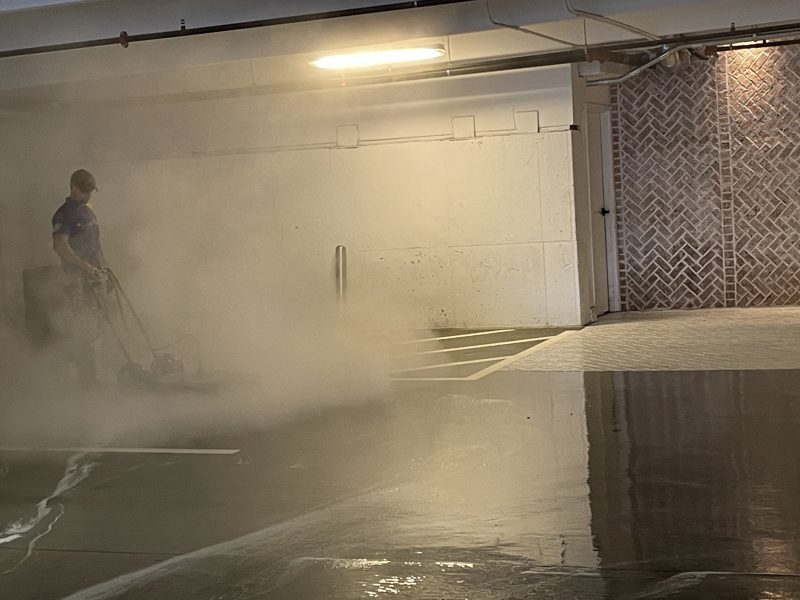
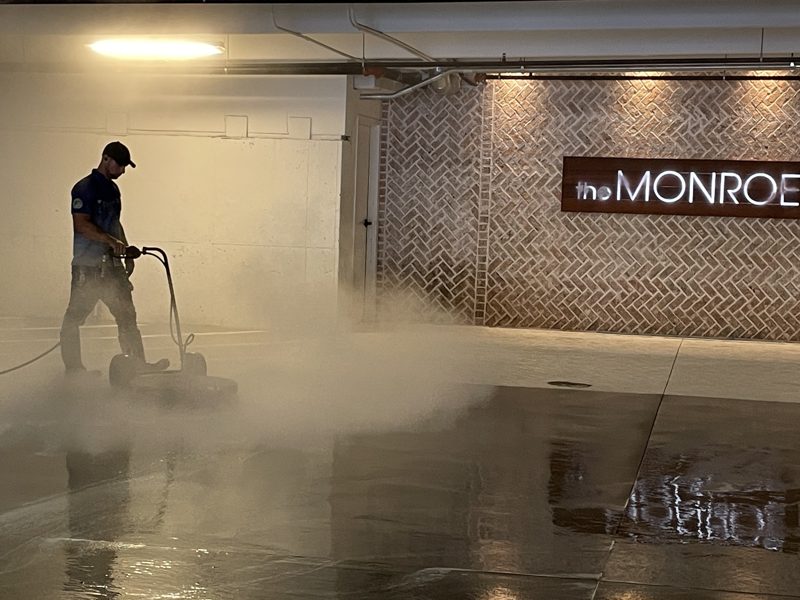
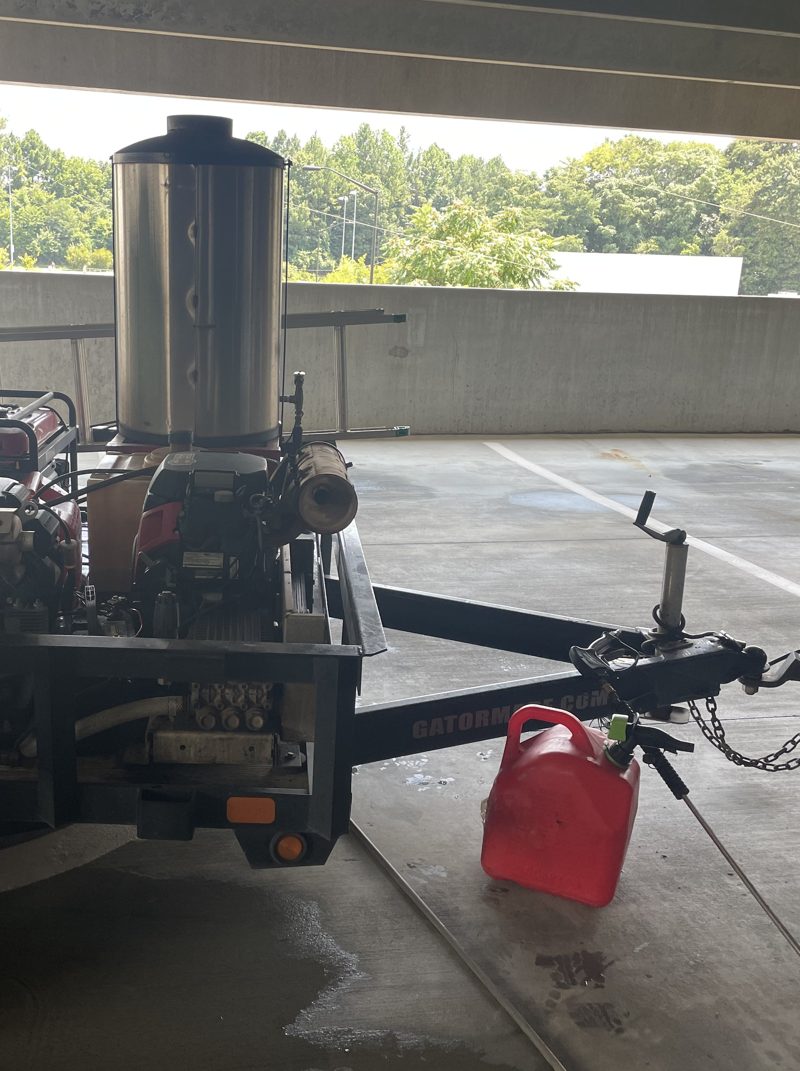
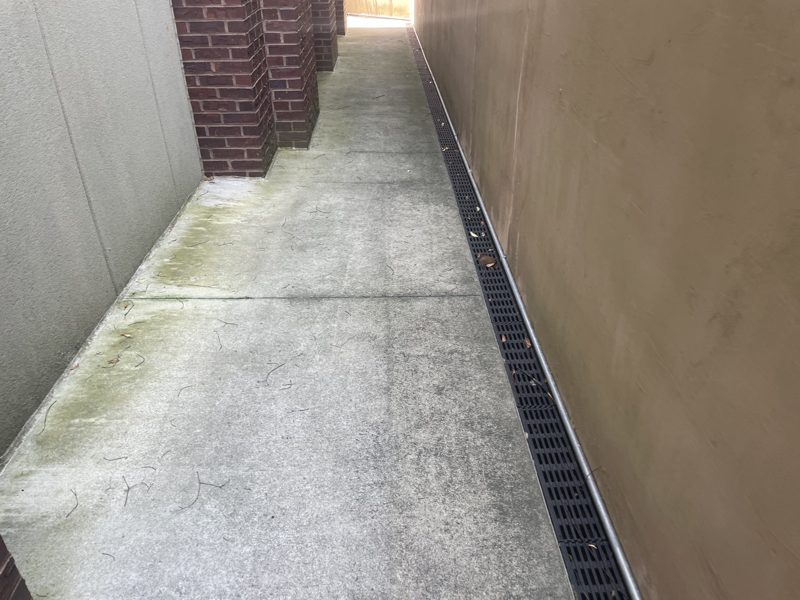
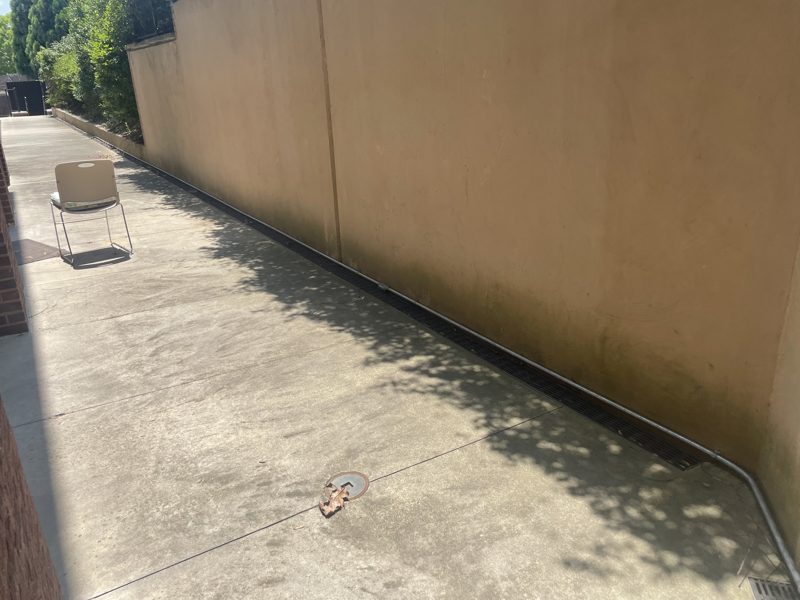
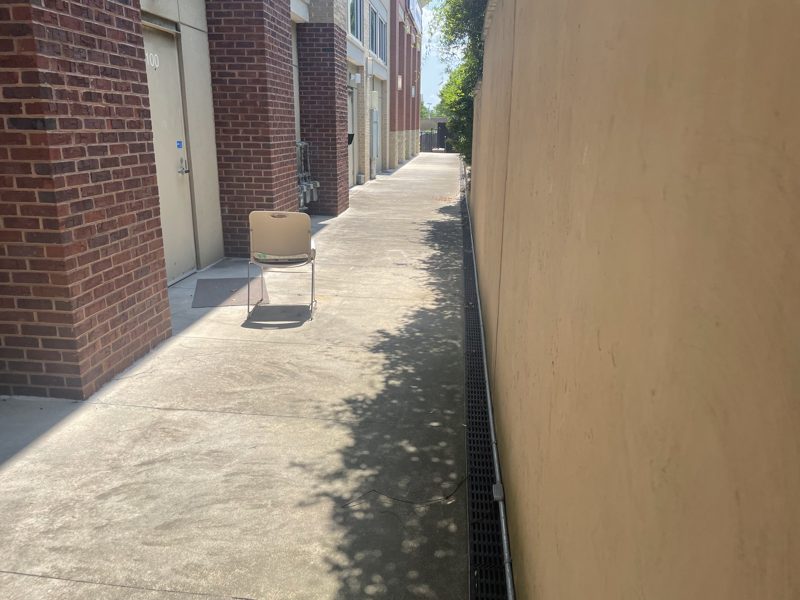
Deck levels during the wash, the rig staged on an open level, and commercial walkway runs on a multi tenant property.
Method
The frames above show the work. This shows the judgment behind it.
The difficulty in this trade is rarely removing the dirt. It is knowing which surfaces cannot take the thing that removes it.
The rule
This is the part of commercial exterior cleaning that separates a contractor from a pressure washer, and it is decided before anyone turns a machine on.
Wash water from exterior cleaning is a non-stormwater discharge. Under the Clean Water Act and the NPDES stormwater regulations at 40 CFR Part 122.26, it must not enter a municipal separate storm sewer system unless that discharge is authorized by an NPDES permit. Most storm drains run to a creek or a river with no treatment in between, which is the whole reason the rule exists.
The practical compliance path is not a permit. It is containment: if nothing reaches a storm drain or a surface water, there is nothing to authorize. That means blocking or berming inlets in the work zone, recovering the water, and disposing of it through a sanitary route or a licensed hauler depending on what it carries. Wash water off a commercial exterior routinely carries sediment, oil and grease, and detergent, and a dumpster pad or a drive lane adds more.
We price containment into the scope rather than as an add. A quote that is cheaper because it omits water handling is not a better price, it is a transferred risk, and the party holding it is the property owner whose drain it went into. If your site has a stormwater permit with specific conditions, send them and we work to those.
Method
Most damage on a commercial exterior comes from applying the residential answer at commercial scale.
Low pressure with a dwell-time chemical treatment. Correct for painted surfaces, EIFS and stucco, most sidings, and anything organic like algae and mildew where killing the growth matters more than blasting it off. High pressure on these removes the growth and the finish together.
Organic growth, coated surfaces
Rotating surface cleaners across flatwork, which is what makes a large concrete area come out evenly. A wand on a big slab leaves stripes that are visible for years under the right light, and stripes are a callback.
Sidewalks, drive lanes, pads
Heat plus a degreaser for drive lanes, dumpster pads, loading areas and anywhere oil has soaked into the pore structure. Cold water moves oil around. It does not lift it.
Dumpster pads, loading docks
Specific chemistry for irrigation rust, fertilizer staining and battery acid, applied to the stain rather than to the whole slab. These do not respond to pressure at any level, and pressure applied until they fade has removed surface concrete instead.
Stains pressure cannot touch
Price
Commercial exterior quotes vary more than the work does, and the variance is usually scope rather than rate.
In the number: mobilization, labor and equipment, water supply where the site cannot provide it, chemical, containment and water recovery, and cleanup of our own work area. Night or early morning sequencing where the property cannot give up the space during business hours is priced in when it is known at quote.
Not in the number: repairs to substrate that was already failing, sealing or coating after cleaning, remediation of a spill we did not cause, work outside the agreed zone, and return visits caused by an area that could not be cleared at the confirmed time. Where cleaning is likely to reveal damage rather than dirt, we say so at the walk rather than after.
One honest caveat that costs us work and is worth saying anyway: cleaning does not restore a surface that has already failed. Spalled concrete, chalked paint and delaminated coating come out cleaner and still look bad, because the problem was never dirt. We would rather tell you that at the walk than take the money and deliver a disappointment.
Cadence
The right interval is set by what lands on the surface and how visible it is, not by a calendar somebody standardized.
Entries, glass surrounds and the first few feet either side of a door carry the impression of the whole property and soil fastest because every visitor touches that ground. Dumpster pads and loading areas are driven by use and by odor, and in a Georgia summer that clock runs faster than in winter. Facades and covered walkways move on a much slower cycle, driven by organic growth on the shaded elevations rather than by traffic.
Setting one interval for all of it means either overpaying on the slow surfaces or underserving the fast ones. A program that cleans entries frequently, hard-use areas seasonally, and elevations annually costs less across a year than a single blanket frequency and looks materially better on the surfaces anyone actually sees.
North-facing and shaded elevations grow algae and mildew faster here than sun-exposed ones, because they stay damp longer. On the same building the shaded side may need twice the frequency of the front, which is invisible on a plan and obvious on a walk.
Questions
The questions that decide the award, answered the way we would answer them on a walk.
Not into a storm drain. Wash water is a non-stormwater discharge under 40 CFR Part 122.26 and does not enter a storm sewer system without NPDES authorization. We contain it in the work zone, recover it, and dispose of it appropriately for what it carries. If your site holds a stormwater permit with specific conditions, send them and we work to those.
Usually yes, in sections. The area is taken in pieces against posted notice and handed back as we go, so tenants and visitors always have a route. It takes longer than clearing the whole site and it is planned that way from the start rather than discovered halfway through.
It can, which is why most of what we do is not high pressure. Painted surfaces, EIFS, stucco and most sidings get low pressure with a chemical treatment. High pressure on those removes the growth and the finish together. The method is chosen from the substrate, not from the machine that happens to be on the truck.
Yes, and for retail, restaurant and medical properties it is often the only sensible window. Tell us at quote rather than at scheduling, because after-hours sequencing changes the crew plan and the price, and finding out at scheduling means one of those two has to move.
Usually one of three things: water handling left out, a smaller scope area, or a single method priced across surfaces that need different ones. Ask any low quote where the wash water goes. The answer tells you which of the three it is.
It depends on the surface. Entries and glass surrounds soil fastest and carry the impression of the whole property. Dumpster pads and loading areas run on use and odor. Facades and covered walkways move much slower, driven by growth on shaded elevations. One blanket frequency either overpays on the slow surfaces or underserves the fast ones.
Sources
The discharge rule is quoted from the regulator rather than summarized from trade practice, so you can check it.
Wash water discharge: United States Environmental Protection Agency, NPDES Stormwater Program, and 40 CFR Part 122.26. Wash water from exterior cleaning is a non-stormwater discharge and must not enter a municipal separate storm sewer system unless authorized by an NPDES permit. Read 2026-08-31.
Certifications: Rare Earth Ltd is a certified Disadvantaged Business Enterprise through the Georgia Unified Certification Program and a certified Minority Business Enterprise, registered in SAM.gov with CAGE code 9JAV8 and UEI Z4WKS4UE8NJ6. HUBZone, 8(a) and SOC 2 are not held and are never represented.
Page maintained by Thrare Contracting, Rare Earth Ltd, 8735 Dunwoody Pl, Ste R (#6), Atlanta, GA 30350.
Tell us the property, the scopes, the timing, and the role you need us in. If it fits, we walk the property and come back with a written scope, a schedule and a number, at no cost to you for the walk. If it does not fit, we will tell you that instead of quoting it.
We aim to reply to every submission within one business day, from a person. Prefer to talk first? Call 678-748-3578.